
Our Services
SupportEd Douglas County
Do you have a student who is experiencing attendance challenges? We can help!
Serving Douglas County, KS, since 1979
CSC’s SupportED program grew out of KU, now representing a re-branded and expanded version of the KU Truancy Prevention and Diversion Program (TPDP). After being operated under Jan Sheldon, PhD, JD, for 40 plus years, she announced plans to retire.
The now founders of Center for Supportive Communities, Dr. Kelsey Dachman, alum and former doctoral student of Dr. Sheldon, and Madison Graham, a current doctoral student at the University of Kansas, knew the program was too valuable to lose. They viewed this transition as an opportunity to refine and expand the program’s services and continue providing impact. Together these experienced professionals launched the Center for Supportive Communities Inc, a nonprofit 501(c)(3) corporation.
Decades of Success
The Problem
Truancy is a complex problem with cumulative effects that extend from year to year. The results of missing school are devastating, especially for students, but also for schools and communities.
In Kansas, truancy can lead to legal proceedings under the child in need of care code, where the State can intervene to ensure the safety and well-being of the child by addressing underlying issues.
15 million US students missed so many days at school they were academically at risk.
That’s 30% of all US students.
The Solution
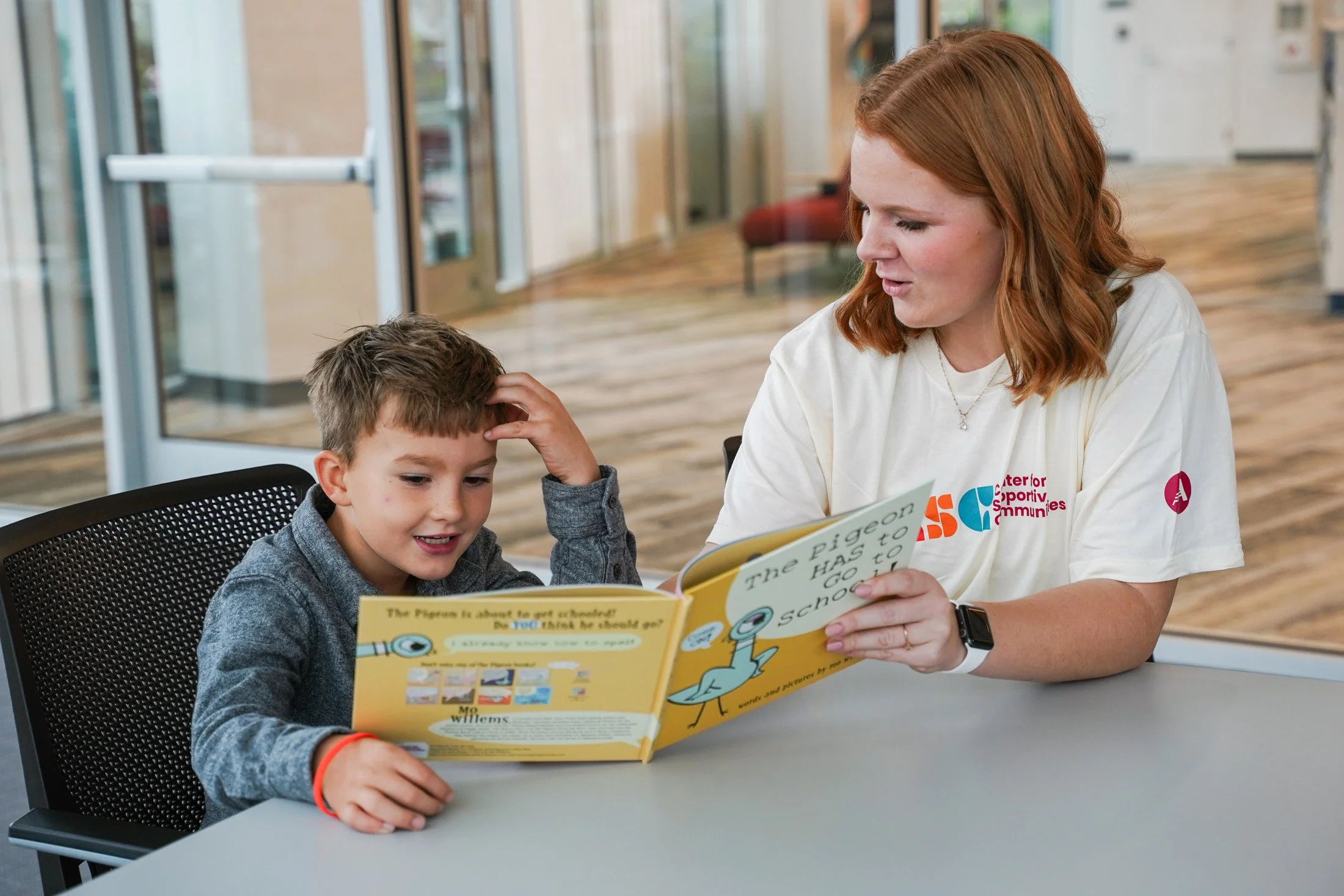
Available to K-12 truant students, SupportEd is a community-wide approach that combines the talents and expertise of diverse partners and collaborators in identifying needs, coordinating services, and implementing interventions to increase school attendance and divert families from court involvement.
With over 40 years of successful practice, SupportEd harnesses the power of behavior science to provide evidence-based solutions that transform lives.
Conducting functional behavior assessments to examine the root causes of truancy.

ASSESSMENT
Connecting the student with a caring adult to serve as a positive role model.

MENTORING
Graph weekly attendance to allow for data-based decision making and progress.

MONITORING
MOTIVATING
Reinforcement-based intervention to increase school attendance and good behavior.

COLLABORATION
Work with schools, legal systems, and other professionals to provide comprehensive services.

The SupportEd Team!
Kelsey M. Dachman,
PhD, BCBA-D, LBA
Program DirectorVanessa Boyd, LMSW
Operations ManagerKJ Abel Ruch, CVA
AmeriCorps Program ManagerKate Holman
Juvenile Services Officer, Douglas County Youth ServicesPam Weigand, MA
Director, Douglas County Youth ServicesHow do I refer a student to SupportEd?
Deliver truancy warning letter + SupportEd program flyer to family.
Complete and email SupportEd’s Referral Form to SupportEd’s Truancy Officer and Case Manager at: cjsys-truancy@dgcoks.gov. Please attach a copy of the truancy warning letter and student’s attendance.
Wait for a response. SupportEd will follow-up with you regarding the outcome of the referral and the next steps within approximately 10 business days.
If family agrees to participate in SupportEd, no further action is needed.
If family is unreachable, refused services, or the student’s attendance worsens while in SupportEd, then complete Form 1006 and then continue to last step. Please include as much information as possible to assist the Kansas Department for Children and Families or the District Attorney’s Office in deciding the outcome of the case and most appropriate services for the family.
Submit Form 1006 to the appropriate agency:
Students 12 & under: complete Kansas Department for Children and Families’ online report using the instructions on p. 3. Please attach Form 1006 and a copy of the truancy warning letter and student’s attendance.
Students 13+: email Form 1006 to District Attorney’s Office and SupportEd’s Truancy Officer and Case Manager at: ljohnson@dgcoks.gov and cjsys-truancy@dgcoks.gov. Please attach a copy of the truancy warning letter and student’s attendance.
No further action is required. Upon receipt of Form 1006, the agency will review and determine one of the following outcomes: (1) return/dismiss the truancy filing to the school, (2) offer a diversion from court and refer to SupportEd for services, or (3) file a Child in Need of Care petition to request a hearing with the judge.
FAQ
-
K-12 students in Douglas County, KS, who have met the legal definition of truancy.
-
In Kansas, truancy is defined as having at least one unexcused absence on three consecutive days, five days in a semester, or seven days in a year.
Douglas County schools define an absence as 1 or more hours for elementary school and 1 or more class periods for middle and high school.
Get started on resolving truancy.
Contacting CSC is the first step towards a stronger community that benefits everyone.